Prepaid vs postpaid electricity in South Africa: which actually costs less?
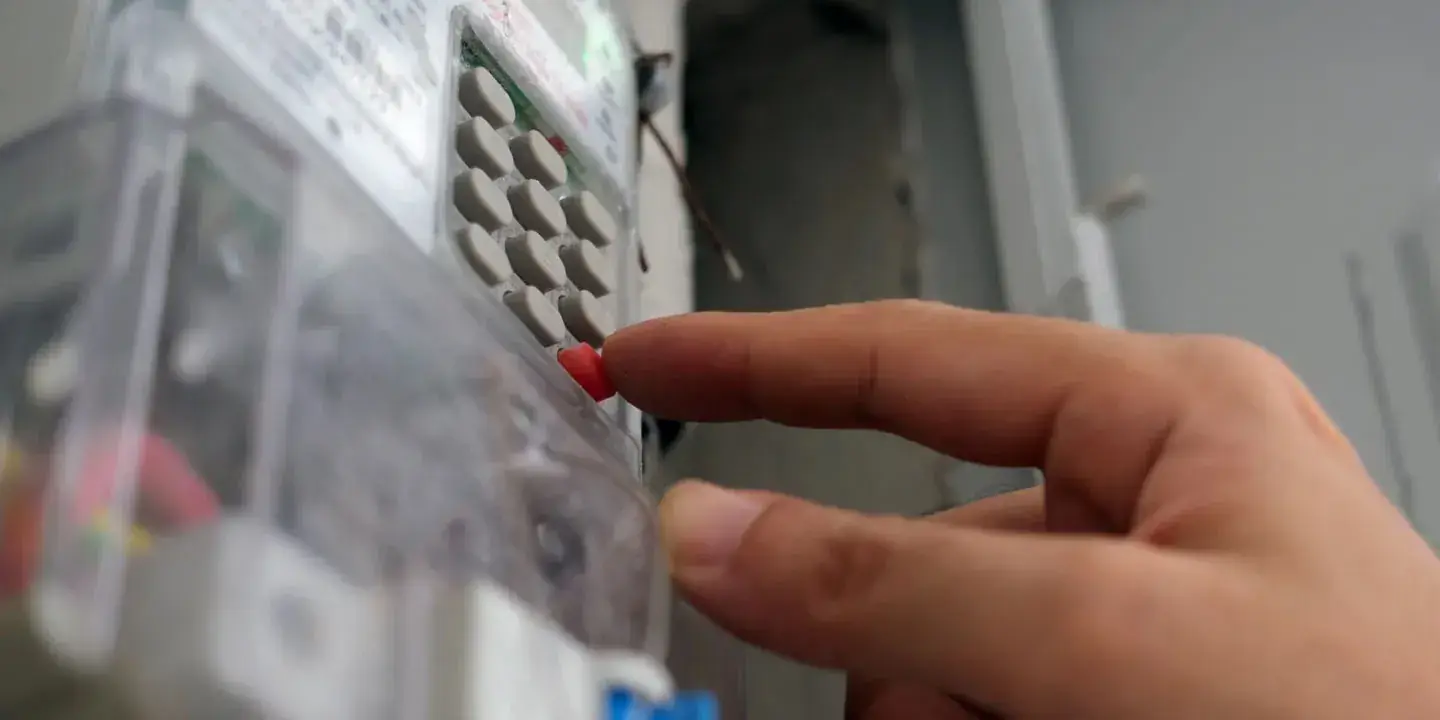
Prepaid electricity is marketed as the budget-friendly choice. The honest answer is more nuanced: for most South African households, the payment method does not change the underlying tariff much at all — what actually changes the bill is the fixed-charge structure behind it.
Both prepaid and postpaid domestic electricity in South Africa are typically billed on the same National Energy Regulator of South Africa (NERSA) approved tariff framework. The real cost difference between the two usually comes down to how fixed charges are treated, not a hidden discount for paying upfront.
What actually differs between prepaid and postpaid?
Prepaid and postpaid are, first and foremost, payment timing mechanisms — pay before you consume, or pay after a billing cycle. Eskom and most municipalities apply the same inclining-block tariff logic to both, using the same NERSA-approved rate card for a given supply area and customer category.
What differs in practice is how the fixed monthly charge is handled. Postpaid domestic accounts commonly carry a basic or network access charge that applies every month, regardless of how much electricity is used. Many prepaid domestic tariffs either reduce or remove that fixed charge, recovering the cost instead through the per-kWh rate.
Inclining-block tariffs, explained
Most domestic electricity tariffs in South Africa, prepaid and postpaid alike, use an inclining block tariff (IBT) structure: the price per kWh increases as consumption rises through a series of defined usage bands. The first block of usage is priced lowest, with each subsequent block priced higher.
Because the block structure applies identically to prepaid and postpaid customers on the same tariff, a household does not reduce its per-kWh rate simply by switching payment method. The blocks reward lower overall consumption, not a particular way of paying for it.
Eskom direct supply vs municipal supply
The comparison also depends heavily on who supplies the property. Eskom-supplied areas use Eskom’s own prepaid and conventional domestic tariff structures, while municipalities such as City Power (Johannesburg), Ekurhuleni and Tshwane each gazette their own NERSA-guided tariffs annually. Two households on the same appliances and usage pattern can see meaningfully different bills purely because they fall under different licensed distributors.
This means there is no single, national answer to "is prepaid cheaper?" — the honest comparison has to be done tariff schedule by tariff schedule, for the specific supply area a property falls under.
Which household profiles actually benefit from prepaid?
Once the fixed-charge and block-tariff mechanics are understood, the practical comparison comes down to consumption profile:
- Low-consumption households — those comfortably inside the first usage block each month — often benefit most from a prepaid tariff with a reduced or absent fixed charge, since a postpaid low-usage household still pays that fixed charge every month regardless of how little electricity was used.
- High-consumption households — those regularly reaching the higher inclining blocks — see the fixed charge become a smaller share of the total bill either way, so the payment method matters less than simply reducing overall consumption.
- Households with variable income or cash-flow pressure — prepaid removes arrears risk and disconnection-for-non-payment entirely, and gives real-time visibility of spend, which has budgeting value independent of the strict rand-for-rand comparison.
How to do the comparison properly
Rather than assuming prepaid is automatically cheaper, the more reliable approach is to pull the current gazetted domestic tariff schedule for the specific supply area, compare the fixed charge (if any) and the block thresholds for both payment options, and apply it to actual historical monthly consumption — not an assumed average.
For most low-usage households this favours prepaid. For high-usage households the difference narrows considerably, and the decision is often better made on convenience, budgeting discipline and cash-flow control rather than a marginal rand difference.
Final takeaway
Prepaid electricity in South Africa is not automatically cheaper — it is a different way of recovering the same NERSA-approved tariff, usually with a lighter or absent fixed charge. That structural difference tends to favour lower-consumption households the most, while higher-consumption households see a smaller effect from payment method alone. The reliable way to answer "which costs less" is always the specific tariff schedule for the property’s supply area, applied to its actual consumption — not a general assumption about prepaid.
Mosaic Home Services offers prepaid electricity, water and gas on a single wallet. Learn more about Mosaic Wallet.